From Devon: Looking Across at Cornwall, the Island That Isn't (But Sort of Is!)

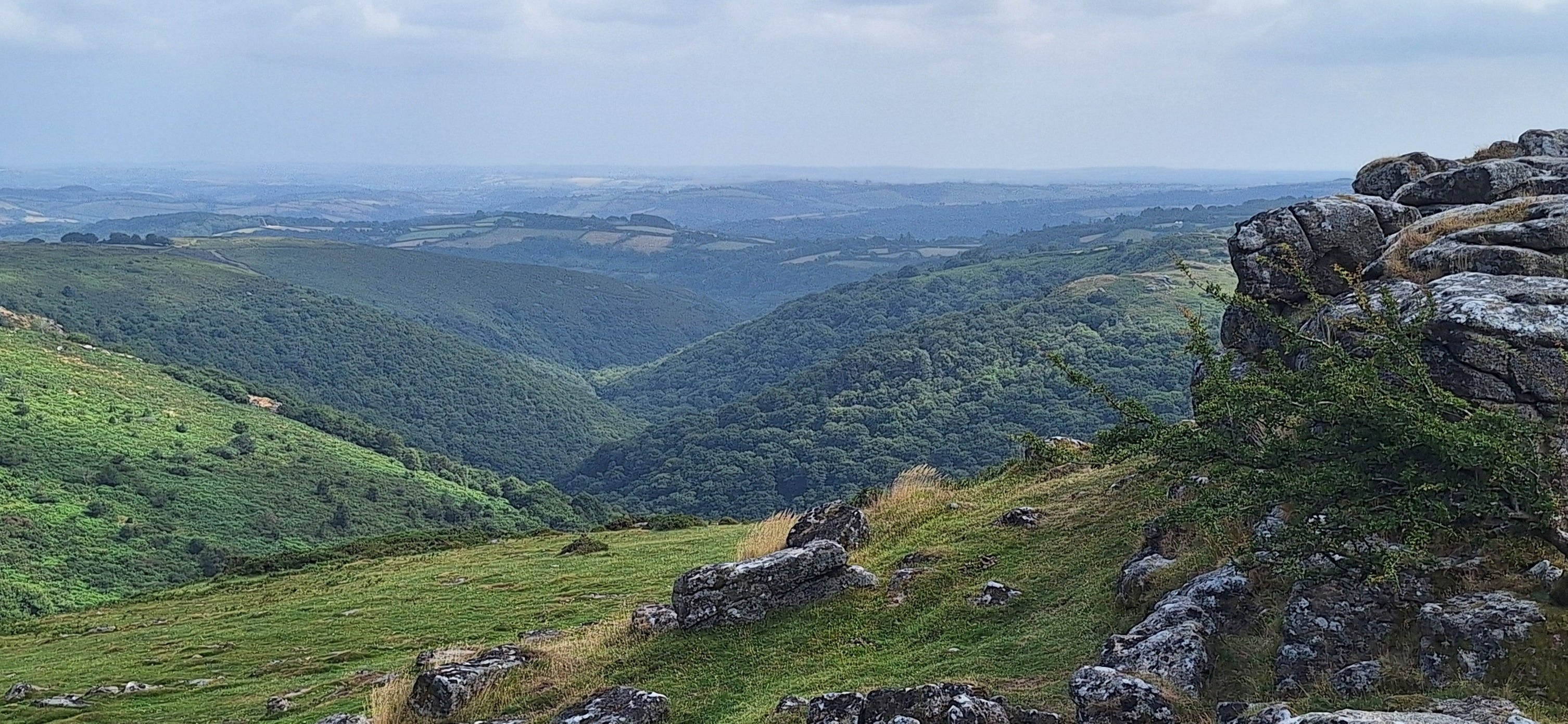
I'm writing this from the edge of Dartmoor in Devon. Gazing west, the hazy outline of Cornwall, just across the Tamar, is just visible. And it’s got me thinking about why Cornwall feels less like another county and more like…well, an island. It’s a thought that might raise an eyebrow or even two, for geographically speaking, Cornwall is unquestionably a peninsula, connected to Devon by a land bridge, defined for much of its length by the River Tamar. But spend any time there, or just think about Cornwall, and you start to feel something deeper.
Tamar itself is more than just a river; it’s a historically significant border that feels more like a channel separating two distinct entities. Crossing it, whether by Brunel’s iconic Royal Albert Bridge, a Victorian marvel of engineering, or the modern Tamar Bridge, always feels like an arrival. Things change, and the road signs soon hint at something different. It’s the closest thing to a ferry crossing you get on the mainland, and that geographical near isolation has truly bred something remarkable.
Cornwall possesses an unmistakable cultural identity that sets it apart. While Devon is undeniably "English," Cornwall feels, to many, distinctly Cornish. It's a place where the sea has carved not just coastlines, but character. The revival of Kernewek, the Cornish language, is a powerful symbol of defiance and distinctiveness; you hear it in place names like Penzance (Pen sans – holy headland) or Marazion (Marghas-yow – Thursday Market), and though not widely spoken, its presence in street signs, in the Cornish Language Partnership, and in traditional song feels vital. It’s a Brythonic Celtic tongue, related to Welsh and particularly to Breton, echoing a deep past that predates modern England. The St. Piran’s Flag isn't just a local emblem; that stark black and white cross flies from houses, businesses, car aerials, even fishing boats in every harbour, a fierce, proud declaration of Cornish identity that you just don't see with county flags elsewhere in England to the same extent. It signals a belonging to something specific, something other. From its legendary links to King Arthur at Tintagel to its ancient, moss-covered crosses and standing stones, Cornwall's story feels self-contained and unique. Its folklore is rich with piskies and knockers, the benevolent spirits of the mines. And those iconic engine houses dotted along the coastline? They’re remnants of its world-leading tin and copper mining heritage, now a UNESCO World Heritage Site, which shaped not just its landscape but its unique social structures and even its historical political autonomy with the Stannary Parliament. This is a place where every cove and craggy headland tells a different, deeper story. Even the food carries this unique flavour; a genuine Cornish Pasty, crimped on the side, not the top, is a portable feast born of the mines, and the Cornish cream tea, jam first of course, is a subtle but firm declaration of difference from the Devon method. These culinary traditions are deeply tied to local produce and history, another marker of a self-contained identity. Much like an island, life in Cornwall is dominated by the sea. Fishing fleets, surfing culture, smuggling tales, dramatic shipwrecks – the Atlantic shapes livelihoods, recreation, and even the temperament of its people. The raw, rugged beauty of its coast is a constant reminder of its exposure to the elements, just like any island. This isn't to say Devon isn't wonderful, it is, and I’ve really enjoyed my week here, although the narrow roads are a challenge, or that English counties don't have their own quirks, but Cornwall’s distinctiveness feels amplified by its near-island status. It’s a bit like stepping onto a different landmass, where the very air itself seems to carry a different history.
Beyond the cultural, this distinctiveness extends into the political realm. Cornwall has a unique constitutional history, notably through its Stannary Parliament, which historically governed the tin mining industry with a degree of independence from Westminster. But that's not the only historical quirk: Cornwall is also home to the Duchy of Cornwall. This isn't just some historic title; it's a private estate established in 1337, traditionally held by the eldest son of the reigning monarch (currently Prince William). Unlike other Crown estates, the Duchy's revenues go directly to the Duke of Cornwall, providing an independent income. This unique and ancient feudal arrangement further underscores Cornwall's special, distinct, status within the UK, reinforcing the narrative that it's "not just another county." While this isn't self-governance, it provides a very tangible, centuries-old example of Cornwall being treated differently. In more recent times, this historical legacy has fuelled a modern political movement. In 2014, the Cornish people were formally recognized as a national minority under the Council of Europe's Framework Convention for the Protection of National Minorities, a significant acknowledgment of their distinct identity, placing them alongside groups like us Scots, the Welsh, and the Irish. This recognition, coupled with a rising sense of self-identification (with a growing number of people choosing "Cornish" as their national identity in censuses), has led to ongoing calls for greater devolution of powers from London, mirroring the political structures seen in other Celtic nations. The "Cornish Question" isn't about outright independence for most, but about a desire for more local control, for policies that truly reflect Cornwall's unique needs and heritage, rather than being dictated by a distant central government. This political dimension is deeply intertwined with the "almost island" perception; the geographical separation reinforces the argument for a distinct political treatment, much like how islands often have unique governance arrangements.
And this sense of "islandness" isn't unique to Cornwall in the world of peninsulas. What of Brittany in France, Cornwall’s true "Celtic cousin," just a short hop across the Channel, connected by a shared ancient heritage. Brittany, too, is a peninsula, jutting out into the Atlantic. And like Cornwall, it possesses an independent spirit forged by its geography and its past. Brezhoneg, the Breton language, is a testament to its enduring identity; it’s a vibrant, living Brythonic Celtic language. Step into western Brittany and you're immersed in a profoundly non-French linguistic and cultural landscape, with bilingual Diwan schools and conversations held in Breton in local markets. Brittany is steeped in unique legends, from its own Arthurian tales to stories of the korrigans (faery folk). The haunting music of the bagpipes (the binioù) and bombardes fills the air at local festivals, particularly the joyous Fest Noz (traditional night gatherings for music and dance). Its spiritual connection to the land is evident in the countless ancient megalithic sites, such as the astounding alignments at Carnac, which predate the arrival of the Celts and link the peninsula to an even more ancient European culture. Bretons often identify as Breton first, and French second; the Gwenn ha Du (the black and white flag with its ermine spots) is as ubiquitous and as passionately displayed as St. Piran's is in Cornwall. This isn't just regional pride; it's a sense of belonging to a distinct cultural nation that fought long and hard to retain its identity against assimilation into France. Culinary traditions, too, reinforce this regional identity, with savoury galettes and sweet crêpes, washed down with local cider, and an abundance of fresh seafood, mussels, and oysters speaking to its deep connection to the ocean. The parallels are striking because both regions share that fundamental characteristic: being a "presqu'île" (French for "almost island"). Their geographical position at the very edge of continents, largely surrounded by sea, allowed unique cultures to flourish, relatively insulated from the dominant powers to their east.
My thoughts of peninsular distinctiveness don't stop at the English Channel. Further north, in Scotland, there’s another intriguing example: the Black Isle. Despite its name, the Black Isle isn't an island at all. It's a peninsula in the Scottish Highlands, bounded by the Moray Firth to the north, the Cromarty Firth to the south, and the Beauly Firth to the west, with its connection to the mainland via a relatively narrow neck of land just north of Inverness. The name "Black Isle" itself suggests a kind of distinct, bounded entity, possibly deriving from its mild climate, which often kept it free of snow (and thus "black") even when the surrounding hills were white (other meanings are available!). This microclimate fosters fertile farmlands that stand out in the rugged Highland landscape. While perhaps not possessing the same level of linguistic distinctiveness as Cornwall or Brittany, the Black Isle cultivates a strong local identity; its quiet villages, rolling agricultural land, and picturesque coastlines feel like a world apart from the more dramatic, mountainous Highlands to the west, or the bustle of Inverness. Many residents fiercely identify with their "Isle," a place that feels separate, self-contained, and uniquely peaceful. Its coastal villages, like Cromarty, have a distinct historical character shaped by their relationship with the sea and the sheltered firths, and the almost complete embrace of the firths gives it the physical sensation of being an island – you travel "onto" the Black Isle, rather than just "through" it.
Then there’s Knoydart. If any place on mainland Britain could claim true "islandness" without being one, it's this rugged, breathtaking peninsula on Scotland's west coast, famously known as "Britain's Last Wilderness." Knoydart is bordered by the deep sea lochs of Nevis and Hourn, and a formidable mountain range to its east. What truly sets it apart is its lack of road access; you can only reach its main settlement, Inverie, by a scenic, rough, seven-mile ferry trip from Mallaig, or a strenuous 16-mile hike across challenging terrain. There are literally no roads connecting it to the UK's main network. This extreme isolation has fostered a sense of self-reliance and a tightly knit community of around 120 people. They run their own hydroelectric power scheme, and the famous Old Forge Inn in Inverie holds the title of Britain's most remote mainland pub. Life here is dictated by the ferry schedule and the weather, much like any island community. Knoydart’s identity is intrinsically linked to its raw, untamed landscape – a paradise for mountaineers, wildlife enthusiasts, and anyone seeking true escape. Its "almost island" status has preserved it as a place where nature reigns supreme and human presence feels respectfully small.
Speaking of French cousins, let's not forget the Cotentin Peninsula in Normandy. While perhaps overshadowed by the D-Day landing beaches it famously hosts, the Cotentin is another prime example of a "presqu'île" with a fascinating identity. Jutting into the English Channel directly across from the UK, the Cotentin is characterized by wild, dramatic coastlines, towering cliffs (like the Nez de Jobourg, some of mainland Europe's highest), and fast-moving tides (the Raz Blanchard, one of the strongest currents in Europe). It truly feels like "the end of the world" in places. Like Cornwall and Brittany, the Cotentin was historically somewhat isolated from the rest of Normandy by marshlands to its south. This natural barrier contributed to the preservation of its distinct Norman dialect (Cotentinais), which is still spoken by some older residents, a linguistic marker of its enduring cultural specificity. Cherbourg-en-Cotentin, its main port, is a major maritime hub, and the peninsula has a strong naval and nuclear industry, adding to its self-contained economic character. And of course, its close proximity and historical ties to the Channel Islands (which were once part of the Duchy of Normandy) further emphasize its unique insular connections. The famous Mont Saint-Michel, just south of the Cotentin, even embodies this "almost island" concept in its very structure!
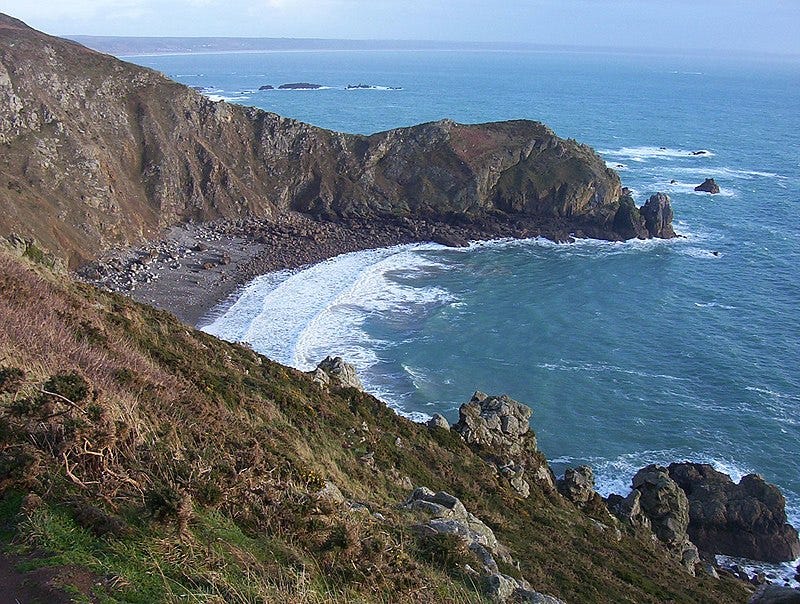
https://commons.wikimedia.org/wiki/Category:Cotentin#/media/File:NezJobourg.jpg
And the pattern continues across the Irish Sea! Ireland's deeply indented Atlantic coastline has created its own share of "almost islands," where geography has profoundly shaped distinct local cultures and traditions. The Dingle Peninsula in County Kerry, jutting out dramatically into the Atlantic, is one of Ireland's most iconic peninsulas. It’s a designated Gaeltacht region, meaning the Irish language is still widely spoken as a community language. This gives it a vibrant, authentic Irish feel, from its traditional music sessions in cozy pubs to its bilingual signage. The "next parish over is Boston" is a common local saying, highlighting its edge-of-the-world remoteness. Its rugged landscape, ancient monastic sites, and strong seafaring traditions further embed its unique identity. Further south along the Wild Atlantic Way, the Beara Peninsula in Counties Cork and Kerry is another wild, untamed finger of land. Less traversed than Dingle or the Iveragh (Ring of Kerry), Beara boasts its own distinct heritage, ancient archaeological sites, and a strong sense of community often linked to its historical copper mines and remote fishing villages. Its challenging mountainous spine (the Caha and Slieve Miskish Mountains) reinforces its isolation, even internally. Like its "almost island" cousins, the sea deeply defines life here.
And this isn't just a British Isles or European phenomenon. Head across the Atlantic to the United States, and you'll find places that fit this "almost island" description perfectly, for example Upper Peninsula of Michigan, often affectionately known as "the U.P." The U.P. is surrounded on three sides by the vast freshwater seas of Lake Superior, Lake Michigan, and Lake Huron. Its primary connection to the rest of Michigan (the "Lower Peninsula") is the magnificent Mackinac Bridge, a five-mile suspension bridge that feels like crossing a grand strait. Before its completion in 1957, travel between the two peninsulas was by ferry, reinforcing a profound sense of separation. This geographical isolation has forged a unique cultural identity for its residents, known as "Yoopers." They have distinct accents, a strong sense of local pride, and a culture deeply influenced by their history of logging, mining (iron and copper), and the hardy lives required to survive harsh winters. The pasty, believe it or not, is a staple here too, brought by Cornish miners who emigrated to work the U.P.'s mines, a neat connection back to our starting point! Much of the U.P. remains rugged wilderness, with vast forests, untouched lakes, and a slower pace of life that sets it apart from the more populous Lower Peninsula, contributing to its feeling of being a distinct land, a world unto itself.
This idea of a peninsula acting like an "almost island" isn't just my holiday musing; it's a concept explored in academic circles, particularly within Island Studies. For academics, peninsulas like those we've discussed are fascinating case studies. They allow researchers in Cultural Geography to explore how physical geography shapes unique regional identities, influencing everything from language (like the survival of Cornish, Breton, Gaeilge, or the Norman dialect of Cotentinais) to local customs and folklore. Historical Geographers examine how these "edges of the land" acted as refuges for ancient cultures or developed distinct economic paths, often tied to maritime life or specific resources like Cornwall's tin and the U.P.'s copper. Even Political Geographers look at how this geographical distinctiveness fuels movements for greater regional autonomy or political identity. And this isn't just a European phenomenon. Researchers across the globe study this dynamic in places like the Iberian Peninsula (Spain and Portugal), where the Pyrenees and surrounding seas fostered a mosaic of distinct cultures and languages like Catalan, Basque, and Galician. In Greece, the Mani Peninsula is famed for its unique clan structures and defiant spirit, historically insulated by its rugged mountains. Similarly, the Korean Peninsula has maintained a powerfully distinct identity despite being at the crossroads of major powers, its mountainous interior and surrounding seas contributing to its unique cultural evolution. These diverse regions demonstrate that "islandness" isn't just about being surrounded by water; it's about a deeper, historical, and cultural separation that can occur when a landform is largely cut off, even if it has a narrow umbilical cord to the mainland, a place where unique traditions can flourish, less diluted by the continental mainstream.
And perhaps this perspective can be scaled up even further. Look at a map of the world. What is Europe itself? Essentially, it's a colossal peninsula of the vast Eurasian landmass, defined by the Atlantic to the west, the Arctic to the north, the Mediterranean to the south, and a less defined, but still significant, land bridge to Asia marked by the Ural and Caucasus Mountains. This "peninsular" nature of Europe, with its deeply indented coastlines and internal geographical barriers, is arguably what allowed for the proliferation of so many distinct nations, languages, and cultures, rather than a single homogenous continent. It’s the ultimate expression of how a place, largely surrounded by water, can foster profound diversity and a strong sense of individual identity among its many parts.
So, as I enjoy the Devon sunshine, I can't help but feel a pull towards that distinct land to the southwest. Cornwall isn't an island in the literal sense, but its unique geography has fostered an identity so strong, so different, that it certainly feels like one. It's a testament to how landforms can shape not just landscapes, but the very soul of a people. And for many of us, that’s precisely its enduring charm.
What are your thoughts? Do you feel that sense of crossing into a different place when you enter Cornwall, or even somewhere like Scotland's Black Isle or Knoydart, France's Cotentin, Ireland's Dingle or Beara, or America's Upper Peninsula? Or does the very shape of Europe make you think differently about continental identity? Let me know in the comments!
Great post Andrew, thank you, and I agree. Having lived on a boat in Old Mill Creek, Dartmouth there are definite paralells with island identity and cultural. I would also say that in my experience the Devon flag is also widley flown in, a white cross, with a black outline on a green background. Dartmouth, always rebellious, steeped in a history of smuggling and privateering (state backed pirating) most notable of whom was Sir Richard Greenville (1542-1591).
I would also draw a paralell with Glastonbury, where I lived and worked for several years, which was once a small island that rose up over the marshes of the Somerset levels. Again steeped in ancient spiritual folklore, being known as the isle of Avalon, also with its links to the King Arthur legend. Today Glastonbury remains a spiritual magnet for many religions, both ancient and relativity new.