The Bridge Effect
How Modern Links Are Redefining 'Islandness' (and What We Lose)

The allure of islands lies for many in their serene isolation, yet this very remoteness holds a profound paradox: their inherent need for connection. It’s a tension that sits right at the heart of islandness, that unique identity shaped by both boundedness and the vital links that tie islands to the wider world. This posting, inspired by the recent news that Italy has given final approval for the world's longest suspension bridge to Sicily, as reported by BBC News, connects directly to research I've done in the past on this fascinating subject. The profound implications of such monumental connections are a central theme we'll explore together.
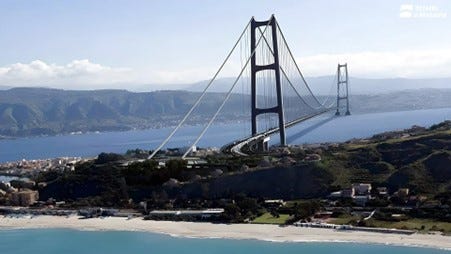
Italy gives final approval for world's longest suspension bridge to Sicily - BBC News
Historically, islands were far from static, isolated entities. In the age of sail, many remote islands functioned as hyper-connected global hubs for trade, exploration, and communication. This inherent duality gives rise to persistent debates, particularly concerning the impact of fixed links. Can an island truly remain an island once a bridge connects it to the mainland? For statistical purposes, the European Union precisely defines islands as territories having: a minimum surface of 1 km²; a minimum distance between the island and the mainland of 1 km; a resident population of more than 50 inhabitants; and no fixed link (for example, a bridge, a tunnel, or a dyke) between the island(s) and the mainland. This strict definition leads the European Union to say no, but the Scottish Government begs to differ, still calling Skye an island despite its fixed link. Personally, I believe an island with a bridge is still very much an island. This isn't just a semantic squabble; it's a reflection of the deep, often conflicting, impacts these physical "bridges" have on island communities. In this posting, I'll broaden the traditional understanding of "bridges" beyond their concrete and steel manifestations, such as tunnels and causeways. I'll extend the concept to encompass metaphorical connections, including the transformative role of air travel, and, crucially, the pervasive influence of digital infrastructure, notably the internet and broadband. This expanded perspective is particularly pertinent in our current era, often characterized by "technological solutionism", a prevailing belief that technology offers the ultimate answer to societal and organizational challenges, even when isolation might be cherished by some islanders, or when these solutions inadvertently introduce new, unforeseen complexities.
Ultimately, fixed links represent a polarizing subject within island communities. While some islanders may cherish the bounded flavour that an island provides, others valorize the benefits of a permanent link, such as convenience and monetary advantages derived from easier transport of people and goods. In some cases, a permanent connection is seen as essential for an island to remain a viable place to live. However, the impacts of fixed links are complex and varied, extending beyond mere economics to encompass profound social, cultural, and environmental effects.
Physical fixed links, encompassing bridges, tunnels, and causeways, have profoundly reshaped island landscapes and the lives of their inhabitants. The decision to construct such links is often driven by the promise of progress, aiming to unlock economic and mobility gains. The allure of a fixed link is clear: reduced transportation costs, easier access to services, and a potential economic boom. One of the most direct economic advantages is their capacity to significantly reduce transportation costs for goods and services, making island living and conducting business less expensive. The Pingtan Strait Bridge in China, completed in 2010, serves as a prime example, resolving inconvenient travel and facilitating the integration of islanders into the mainland economic circle, which in turn boosted local incomes. These fixed links inherently connect islanders to a broader array of services and opportunities available on the mainland, including better educational institutions and medical facilities. These connections can broaden employment prospects beyond traditional island industries. In Burra, Shetland, the opening of bridges enabled men to pursue more interesting and profitable jobs on the Shetland mainland, effectively breaking the centuries-old dominance of fishing. A critical benefit often cited is their role in preventing outmigration and supporting population growth, thereby allowing islands to remain viable places to live. The bridges connecting Trondra and Burra to the Shetland Mainland, opened in 1971, are widely credited with saving these islands from depopulation, with populations surging after their construction. Fixed links are also powerful catalysts for increasing tourism, which in turn significantly boosts local incomes. The Tintagel pedestrian bridge, opened in 2020, was specifically intended to modernise and maximise its appeal as a tourist destination.
But progress often comes at a price. The act of crossing to or from an island, particularly by water, is a deeply sensory and temporal experience that contributes to an emotional geography and a unique sense of island time. This journey often involves intentionality, meticulous planning, and a liminoid time and space that fosters introspection and community interaction. For many, the ferry journey itself becomes a ritual, a period of transition that allows one to adjust to or from the busy-ness of the world. However, fixed links, while offering undeniable convenience, replace this rich, sensate experience with a more seamless, yet often less meaningful, journey. According to Laurie Brinklow, co-editor of a book noted at the end of the posting, the magic of the crossing, deeply embedded in the islander's psyche, can be lost. Islanders on Prince Edward Island, for instance, often romanticized their ferry voyages, recalling the camaraderie of waiting in line and the unique experience of enjoying seafood chowder on board, a sharp contrast to the efficient but less experientially rich passage offered by the Confederation Bridge. The irreversible erosion of intangible capital, such as the unique phenomenological experience and community spirit, represents a profound cost. Physical connections can fundamentally alter how islanders perceive themselves and their place in the world, potentially leading to a sense of loss or erasure of their traditional islandic identity. Increased general islander mobility, while offering greater interaction with mainlanders, is not universally welcomed; some residents find their peace and quiet disturbed by outsiders visiting 'our' beach. Moreover, fixed links can trigger significant changes in population dynamics, affecting the size and composition of the community, which in turn profoundly impacts local culture and identity. In Burra, Shetland, the introduction of bridges led to an immediate invasion feeling from mainlanders, disrupting the once tight-knit community and leading residents to note a dramatically lost community spirit. Increased population resulting from fixed links can also lead to greater demands for housing and infrastructure development on the island, potentially causing habitat loss, significant land-use changes, and increased pressure on natural resources. The proposed tunnel linking Gozo to Malta has raised considerable environmental concerns, including fears of overdevelopment and increased pressure on Outside Development Zones (ODZs). The Chamber of Commerce in Malta explicitly stated that the tunnel had already exerted a "major negative impact on Gozo's environment even before it started being built." A siphon effect and centralization of resources is another critical observation. The Pingtan Strait Bridge, for example, led to a siphon effect"where a growing number of islanders chose to buy houses in Fuzhou City on the mainland. This pattern indicates that while fixed links improve accessibility, they can also paradoxically lead to a drain of human and economic capital from the island periphery towards mainland centres.
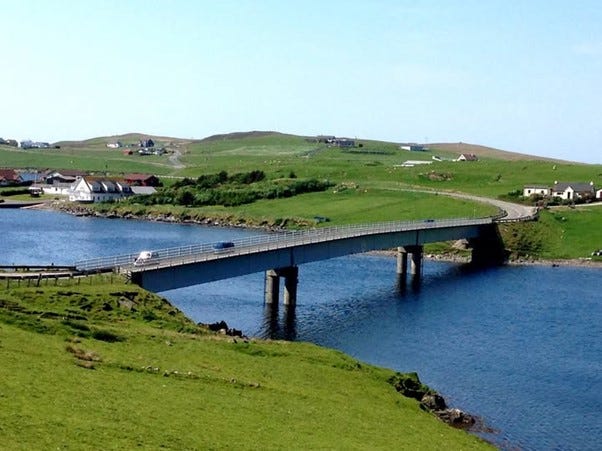
Trondra bridge, Shetland
The proposed Messina Bridge to Sicily also faces strong, often polarized, opinions among Sicilians. While proponents envision a significant economic boost and improved connectivity, many locals remain deeply sceptical. Concerns are high regarding the colossal cost of the project, with many arguing that funds would be better spent on improving Sicily's existing, often dilapidated, internal road and rail infrastructure. There's a prevailing sentiment that the island needs better internal connections more urgently than a link to the mainland, fearing the bridge would simply create a bottleneck without addressing fundamental transport issues. Furthermore, the long history of the project being proposed and then cancelled contributes to a general sense of scepticism about its eventual realization. A major worry for Sicilians is the historical risk of mafia infiltration into large public works projects, leading to corruption, inflated costs, and delays. Environmental groups have also vocally opposed the bridge, citing serious risks to the Strait's unique marine ecosystems and its importance as a migratory route for birds, arguing that environmental studies are insufficient or outdated. The seismic risk of the Strait of Messina, a highly active fault zone, remains a significant concern, despite assurances from engineers. Lastly, the project's plan involves the expropriation of homes, which would force thousands of residents to relocate, leading to protests and a sense of displacement.
Beyond concrete and steel, bridges in our hyper-connected world take on new forms. Air travel and digital infrastructure have become powerful metaphorical links, redefining what it means to be isolated. These metaphorical bridges offer new forms of connection, fostering diverse opportunities, yet they also introduce their own set of challenges and transformations. Air travel has fundamentally altered the relationship between islands and the wider world, particularly for those in extreme isolation. For many remote islands, air travel drastically cuts travel time, making previously inaccessible locations viable for timely connections. This enhanced accessibility is not merely a convenience; it is often a matter of life and death, providing crucial, life-saving medical evacuations. Air travel fundamentally alters the island's perceived boundaries by blurring the traditional land-water separation, fundamentally changing how people perceive islands, especially from an aerial perspective. This presents a fascinating paradox: while the experience of flying might detach one from the immediate water boundary, the visual perspective from above clearly delineates the island as a bounded entity.
Saint Helena's Airport Saint Helena, one of the world's most remote inhabited islands in the South Atlantic, offers a compelling case study of air travel's impact. Historically, it served as a key maritime transportation hub but became significantly disconnected with the decline of sail and the advent of mass air travel. The island's new airport, opened in 2017 at a cost of £285 million, replaced a five-day ocean voyage with a six-hour flight from Johannesburg. The airport's immediate and universally applauded impact was its ability to facilitate crucial medical evacuations. It also made travel for family events and short leisure trips viable. Economically, the airport shifted the island's prospects towards increased tourism and attracted outside investment, aiming to reduce the island's long-term reliance on UK budgetary aid. Socially and culturally, the opening of the airport led to the loss of the "Ship Day" rhythm and the emotional connection many Saints felt to the Royal Mail Ship (RMS) St Helena, which had served as the island's primary lifeline. There were fears among residents that the island would become very similar to other islands or more twenty-first century.
In the 21st century, digital connectivity, particularly the internet, has emerged as a new form of bridging, fundamentally redefining island isolation and opening unprecedented opportunities. The internet is frequently described as the new ocean of the 21st century, enabling islanders to achieve a level of hyper-connectivity comparable to mainland populations. This digital infrastructure allows for online shopping, seamless connection with interest groups, family, and friends worldwide, and even facilitates activities like teaching online Master's degrees in Island Studies. Islands are no longer merely recipients of external information; they are becoming integral parts of a global knowledge network, attracting digital nomads and driving innovation. High-speed internet empowers islands to develop innovative solutions for pressing issues such as depopulation, sustainable tourism, and broader socio-economic development. Islands are actively capitalizing on the rise of digital nomads by offering attractive environments and specialized visas, thereby integrating these remote workers into local economies without necessarily displacing local jobs. Arranmore, an Irish island, transformed itself into "the most connected island" through the implementation of high-speed internet and a digital hub, successfully attracting remote workers and reinvigorating its local economy. Digital bridges provide island communities with unprecedented opportunities to assert greater self-reliance and even engage in discussions about self-determination. Saint Helena, for instance, is leveraging new high-speed internet cables to connect to the wider global network and collaborate with regional hubs, aiming to reduce its economic dependence on UK aid. Beyond internal governance, digital bridges enable island nations to advocate effectively on global issues and foster international collaborations, overcoming traditional geographical barriers. Kiribati's former President, Anote Tong, famously used digital media to raise global awareness about the existential threat of rising sea levels due to climate change. Despite the myriad benefits, digital infrastructure is not without its vulnerabilities. The severe disruption caused by the SHEFA-2 submarine fibre optic cable cut in Shetland in October 2022, which crippled phone, mobile, and broadband services, starkly highlighted the fundamental vulnerability of Shetland’s current island infrastructure. This incident revealed a critical observation: the nature of isolation is shifting from purely geographic to infrastructural.
The decision to implement fixed links or embrace new forms of connectivity invariably leads to contentious debates, highlighting fundamental divides within island communities and challenging traditional notions of development. The discourse surrounding fixed links consistently reveals a deep-seated fracture between the pursuit of progress and the desire for preservation. Progress is often articulated in terms of convenience, economic growth, and overcoming perceived isolation. Conversely, preservation emphasizes safeguarding islandness, traditional ways of life, and environmental integrity. This dynamic frequently pits quantifiable economic benefits against more intangible social and cultural values. Economic advantages are typically presented with clear metrics and immediate appeal, making them easier to advocate for. In contrast, the potential costs, like the erosion of identity or disruption of community spirit, are often intangible or manifest over extended periods, making them more challenging to quantify and defend.
Decisions regarding fixed links are rarely straightforward, involving complex political dynamics, shifting public opinion, and often resulting in deep community divisions. The plebiscite on Prince Edward Island, where 59.1% voted in favour of the Confederation Bridge, clearly demonstrated these deep societal cleavages. Decisions are frequently influenced by national macro-policies and external funding bodies, rather than solely by the immediate needs or desires of local islanders. The Pingtan Strait Railway-Expressway Bridge in China, for example, was primarily driven by national highway planning, exceeding the direct practical demands of the Pingtan Islands themselves. A recurring point of contention is the perceived lack of transparency and insufficient public consultation during planning. In the Maltese archipelago, NGOs have heavily criticized the scarcity of published studies and limited public engagement, asserting that an informed discussion on the Malta-Gozo tunnel has yet to start. Even when there is general support for a fixed link, specific project details, such as the exact landing points or design elements, can become sources of intense local disputes. In Burra, Shetland, the debate was not whether to build the bridges, but rather precisely where they should land, underscoring the powerful influence of hyper-localism. The strategic choice to not bridge, even when technically feasible, is also a powerful counter-narrative. The case of Gulang Island in China, which strategically chose not to bridge to the mainland and subsequently achieved world-class popularity and World Heritage status because of its boundedness, serves as a critical counter-narrative to the prevailing technological solutionism. This demonstrates the emergence of strategic un-bridging as a viable development model for some islands. Another compelling example of islanders rejecting a fixed link comes from Fårö, a Swedish island. Despite proposals for a permanent connection to the mainland, residents twice voted against the bridge, prioritizing the preservation of their unique island character and way of life over the perceived convenience of a fixed link. Similarly, on the Isle of Wight in the UK, a significant majority of residents and the local council have consistently opposed the idea of a fixed link to the mainland, preferring to maintain their island's distinct identity and manage connectivity through ferry services.
Bridges, in their multifaceted forms, ranging from physical fixed links to the transformative influences of air travel and digital connectivity, exert a profound and complex impact on island communities. These connections undeniably offer substantial benefits, including enhanced economic viability, improved access to essential services, and a significant reduction in traditional geographical isolation. However, these advantages frequently come at considerable, often intangible, costs related to the erosion of unique islandness, the disruption of community cohesion, the imposition of environmental pressures, and the emergence of new forms of vulnerability.
Islands are dynamic socio-ecological systems, perpetually navigating a delicate tension between the desire for modern conveniences and economic development, and the imperative to preserve their distinct identities and fragile ecosystems. The decision to bridge, or indeed, not to bridge, is rarely a simple one, invariably involving intricate trade-offs. The prevailing ideology of technological solutionism often oversimplifies these complex choices, but the diverse experiences of islands worldwide clearly illustrate that a one-size-fits-all approach is inappropriate. Some islands demonstrably thrive by embracing extensive connectivity, while others find success and sustainability in strategically maintaining their boundedness.
Moving forward, future decisions regarding island connectivity must transcend purely economic metrics. A more holistic approach is required, one that integrates comprehensive social, cultural, and environmental impact assessments. Crucially, greater transparency, genuine public consultation, and enhanced local autonomy in decision-making processes are paramount. This ensures that connectivity projects truly serve the long-term interests and unique aspirations of island communities, rather than being imposed by external agendas or driven solely by mainland-centric perspectives. Furthermore, building resilience against both physical infrastructure failures (such as weather-vulnerable bridges) and digital infrastructure vulnerabilities (as starkly demonstrated by submarine cable cuts) is essential to safeguard the well-being and continuity of island life. Ultimately, the overarching objective should be to empower islanders to chart their own course, enabling them to judiciously leverage the benefits of connection while simultaneously safeguarding the intrinsic value and distinctiveness of their unique islandness.
If you are an islander and live on an island without a bridge, would you want one?
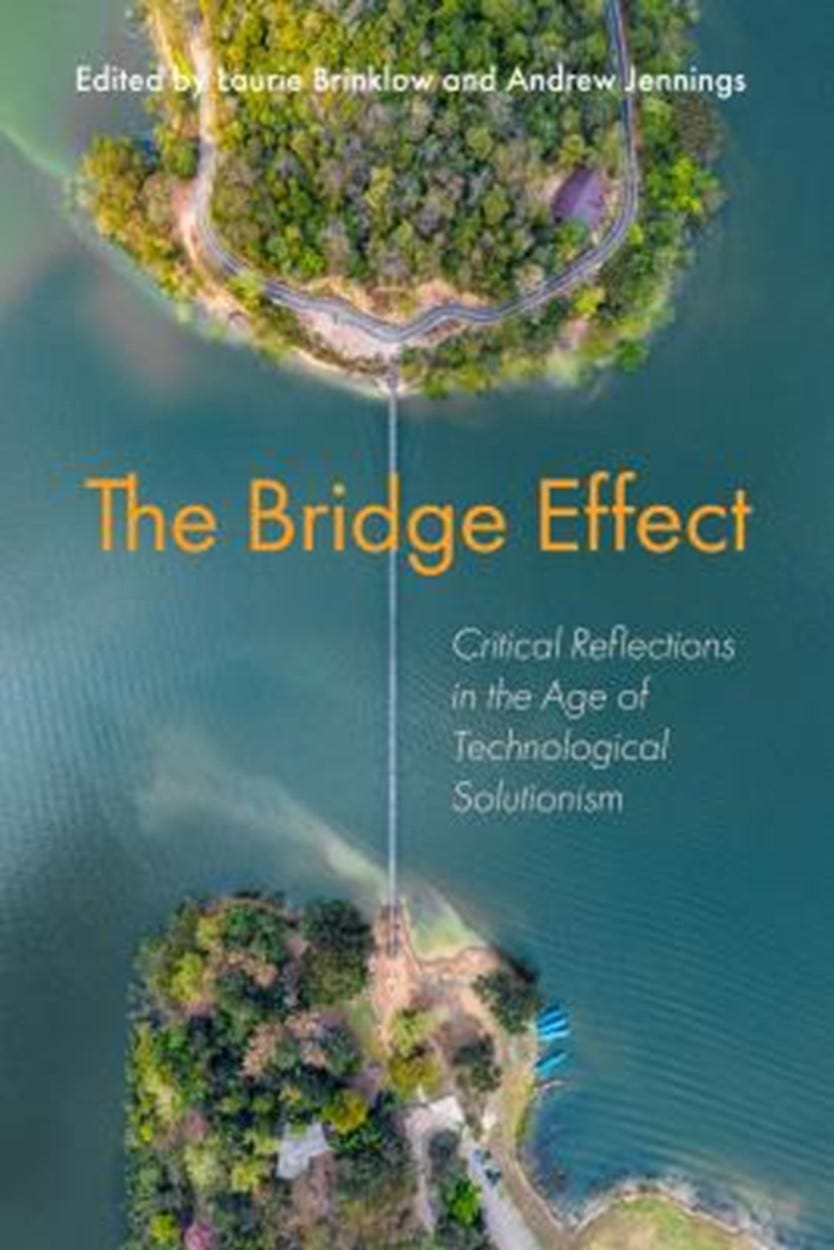
For a deeper exploration into these complex dynamics, why not read my book co-edited with Laurie Brinklow, The Bridge Effect. UPEI Bookstore
Oops I’m new to Substack and sent the message prematurely. Your paper also made me think of the “islands” of cultural isolation we have in the form of fly in only First Nation communities. Roads, when they are built bring benefits ie cheaper food and fuel but also drugs, alcohol and other detrimental products. Roads also are roads out for the out migration of young people and culture or young women who end up victims of those who benefit from exploiting the naive or the desperate. Of course, as you’ve shown, none of this is bridge or road dependant but it is clear that the easier the link is to navigate, the easier it is for good and bad to travel in both directions.
I’m enjoying the Substack. Thanks.
A fascinating and thought-provoking read, especially the part about air travel and digital infrastructure as new metaphorical bridges.